Practical guide
How to Back Up Files on Windows and Mac
Make a separate copy of important files, keep earlier versions and test that you can restore them. An automatic schedule helps only if the destination remains available and failed jobs are noticed.
Before the first backup
- Find documents, photos, project folders and exported application data. Check whether cloud-only files need a separate download or export.
- Use a destination independent of the source disk. Check available space and decide whether the backup needs encryption.
- Decide how much recent work you can afford to lose; use that interval to set the schedule.
Back up files on Windows
- Connect your backup drive or make the intended network destination available.
- Open Control Panel, search for File History and select a drive. Review which folders are covered before turning it on.
- Run the first backup and check its completion status. For folders outside its coverage, use a separate backup job or documented export process.
- Find a backed-up file in File History and restore a copy. Check the content before relying on the schedule.
Windows Backup is another Microsoft option for selected folders and settings associated with your account. It is not interchangeable with a complete disk image. See Microsoft documentation for the available recovery paths.
Back up files on a Mac
- Connect a disk intended for backups. Save any existing contents elsewhere before accepting an erase or format prompt.
- Open System Settings, choose General, then Time Machine, and add a backup disk.
- Choose encryption if needed, store the password safely and allow the first backup to finish.
- Open Time Machine, locate a sample file and test restoring it.
Keep the backup useful
Review failed jobs, confirm new folders are covered and restore a sample after important changes. Keep another copy away from the computer. Disconnect a removable backup when it is not needed, if that fits your schedule.
Related products
These catalog tools focus on Windows file backups. The Mac instructions above use Time Machine.
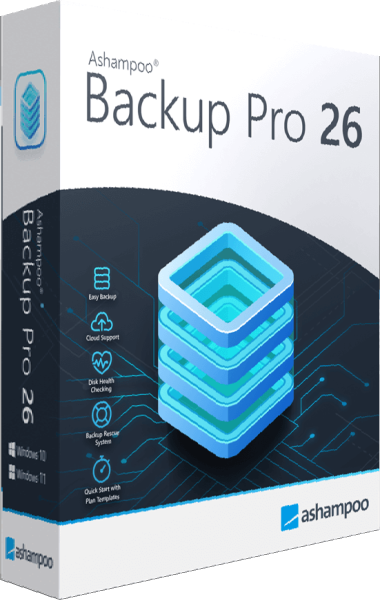
Ashampoo Backup Pro
Create automatic file and partition backups to local, network, or cloud storage.
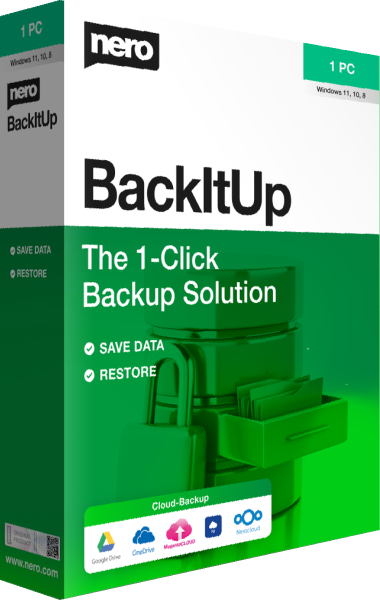
Nero BackItUp
Schedule backups to local, USB, NAS, or cloud storage and restore selected file versions.