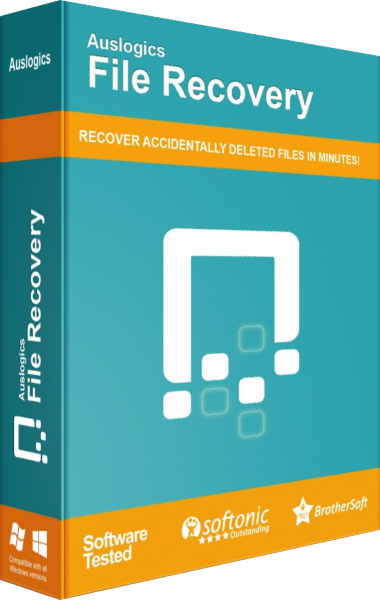
Search for deleted files with Auslogics File Recovery
Auslogics File Recovery scans storage for deleted files and lets you review results before recovering selected items. It supports hard drives, USB storage, and memory cards, with searches covering NTFS, FAT16/32, and exFAT.
Start with the location where the files were lost. Recovery depends on what remains on the storage, so finding a file name is not a guarantee that its original contents can be restored.
Preserve the source before attempting recovery
Avoid writing new data to the affected drive. New files can overwrite space previously occupied by deleted content, reducing the chance of a complete recovery.
Do not install recovery software or save recovered files onto the storage you are trying to recover. Choose a separate destination with enough capacity and check that you have selected the correct source.
Narrow the search and inspect the results
Search filters include file type, name, date, and size. Results include file-state information, with previews for supported content such as images and documents.
Begin with details you remember, then broaden the search if needed. Inspect a preview where available, but also open recovered copies in their normal applications to verify that the contents are usable.
Look for files from lost partitions
The application can search for data associated with lost partitions and quick-formatted storage. Recovery remains dependent on the surviving data and the changes made since the loss.
Do not reformat or repartition the source as a preparation step. If files are important, preserve the current state rather than experimenting with unrelated disk-maintenance operations.
Work from a disk image when appropriate
The built-in disk-image tool can create an image and open it for file-recovery work. Save the image on a different disk from the source.
An image needs adequate destination space and is not a promise of a bootable Windows backup. For a drive showing physical failure symptoms, repeated scans or imaging attempts may be inappropriate; consider specialist recovery before further use.
Check edition limits and recovery results
The standard and Pro workflows differ in recovery limits, including file size and the number of files recovered per scan. Review the selected edition before planning a large recovery task.
Recover a representative selection first and verify the contents on the separate destination. Keep the original storage unchanged until you have confirmed the files you need are usable.
Keep recovery separate from deletion and cleanup
File Shredder and free-space wiping are additional tools with a different purpose from recovery. Do not run them on a source containing data you still hope to retrieve.
For routine cleanup, compare Auslogics Duplicate File Finder and Auslogics Windows Slimmer after recovery is complete. Maintain independent backups so that a future deletion does not leave recovery scanning as your only option.