Product comparison
Tipard HD Video Converter vs Ashampoo Video Optimizer Pro 3
Tipard HD Video Converter prepares camera recordings through file conversion, clip edits and output profiles. Ashampoo Video Optimizer Pro 3 focuses on correcting recordings before export, including stabilization, noise reduction, deflickering and lens distortion. Choose around the source problem and the required output.
Compare conversion and preparation
| Task | Tipard HD Video Converter | Ashampoo Video Optimizer Pro 3 |
|---|---|---|
| Primary workflow | Convert 4K, HD and SD video with custom reusable output profiles | Correct and prepare video using optimization controls and presets |
| Lighting and color | Brightness, contrast, saturation and hue | Color, white balance, exposure and related picture adjustments |
| Motion | Deinterlacing for interlaced footage | Video stabilization and slow-motion or time-lapse effects |
| Other corrections | Manual picture changes and basic clip preparation | Noise reduction, sharpening, deflickering and lens distortion correction |
| Clip preparation | Trim, crop, merge, set aspect ratio and add watermarks | Trim, merge, rotate, crop and use text or image overlays |
| Output workflow | Video/audio conversion with encoder, resolution, frame-rate and bitrate settings | Batch processing, custom presets, H.265 and 4K workflows |
Which workflow fits?
Choose HD Video Converter for camera-file preparation
Tipard HD Video Converter suits converting local recordings, trimming or merging clips, adjusting the picture and extracting sound. Save named output profiles when the same encoder and resolution settings are useful again. For TS, MTS, M2TS or MXF footage, test a real sample from the camera before converting the remaining recordings.
Choose Video Optimizer Pro for correction-heavy camera footage
Ashampoo Video Optimizer Pro 3 provides the compared workflow. Ashampoo Video Optimizer Pro 3 suits recordings that need camera-shake reduction, lens correction, deflickering or detailed color preparation. Use its presets as a starting point, then inspect the result. HD Video Converter is relevant when the main job is a compatible viewing file, a crop or trim, or a selected audio export.
Check the source and controls
Lens correction, deflickering and deinterlacing address different artifacts. Stabilization is also separate from changing frame rate or output size. Some corrections can affect framing or detail, so compare the same passage rather than judging tools from their feature names.
A 4K-to-1080p conversion changes output dimensions and may change visible detail. Re-encoding or lowering bitrate can also affect motion and fine texture. Keep the original footage and compare a short result at the intended viewing size before accepting the settings.
Verify a camera sample
- Identify the source issue: compatibility, interlacing, shake, flicker, lens distortion or lighting.
- Test a supported camera sample and apply only the corrections relevant to that recording.
- Inspect the whole clip after processing, especially when an effect applies across the recording.
- Compare motion, framing and texture in a short export and verify playback before running a batch.
Check dialogue, audio channels, subtitle behavior and picture proportions as well as the image itself. Use a separate export folder and clear filenames. This comparison describes documented workflows; it does not report measured speed or a tested picture-quality winner.
Compared products
Review the selected catalog entries and confirm the source formats, preparation controls and output choices needed for your recordings.

Tipard HD Video Converter
Convert camera recordings and other videos, trim or merge clips, adjust the picture and extract audio.
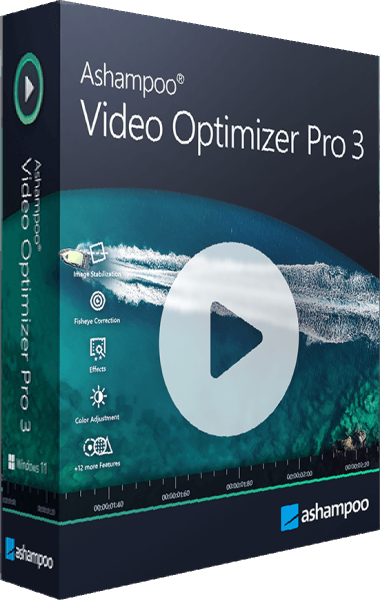
Ashampoo Video Optimizer Pro
Enhance colors, stabilize shaky footage, and reduce noise and flicker.